The Discipline of Thin
Why making slim watches is a technical challenge
Editor’s Pick
Thinness looks effortless.
In watchmaking, it is anything but.
A slim watch often reads as minimal, elegant, and refined. But beneath that restraint lies some of the most demanding engineering in horology. Reducing a watch’s height is not about removing material. It is about rethinking how time itself is assembled.
When a watch becomes thinner, every decision becomes tighter.
A mechanical watch is a layered system. Case, crystal, dial, hands, movement, caseback. Each layer depends on the next. Slimming a watch means compressing this entire vertical stack without compromising performance.
There is no empty space inside a watch. Every fraction of a millimetre is already doing a job.
Reducing thickness requires components to be redesigned, not resized. Bridges must be slimmer but just as rigid. Gears must retain precision despite reduced tolerances. Springs must store enough energy without added height. The margin for error shrinks dramatically.
In thin watchmaking, precision is not a feature. It is a necessity.
One of the biggest challenges in achieving thinness is structural integrity.
Thinner components are more vulnerable to flex, shock, and wear. A movement that is too delicate will lose accuracy over time. A case that is too slender may distort under pressure. Even the crystal and caseback demand careful engineering when thickness is reduced.
This is where material science becomes essential. Strong alloys, precise fabrication, and reinforced construction allow a thin watch to maintain durability without visual weight. The balance between resilience and refinement is deliberate.
Titan’s relationship with slim watchmaking is not recent.
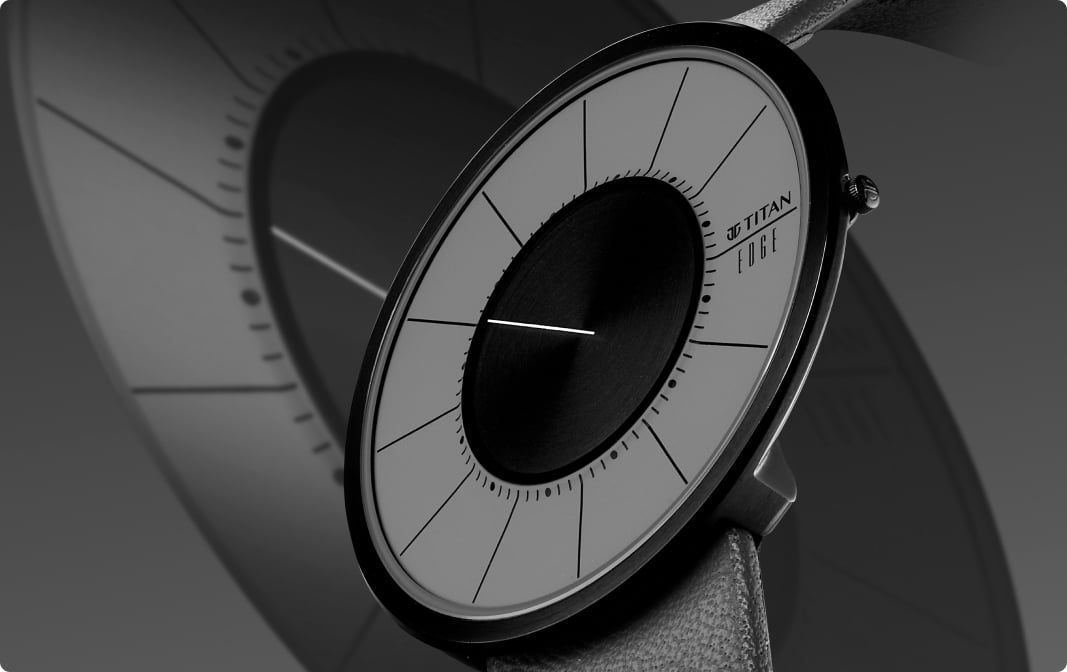
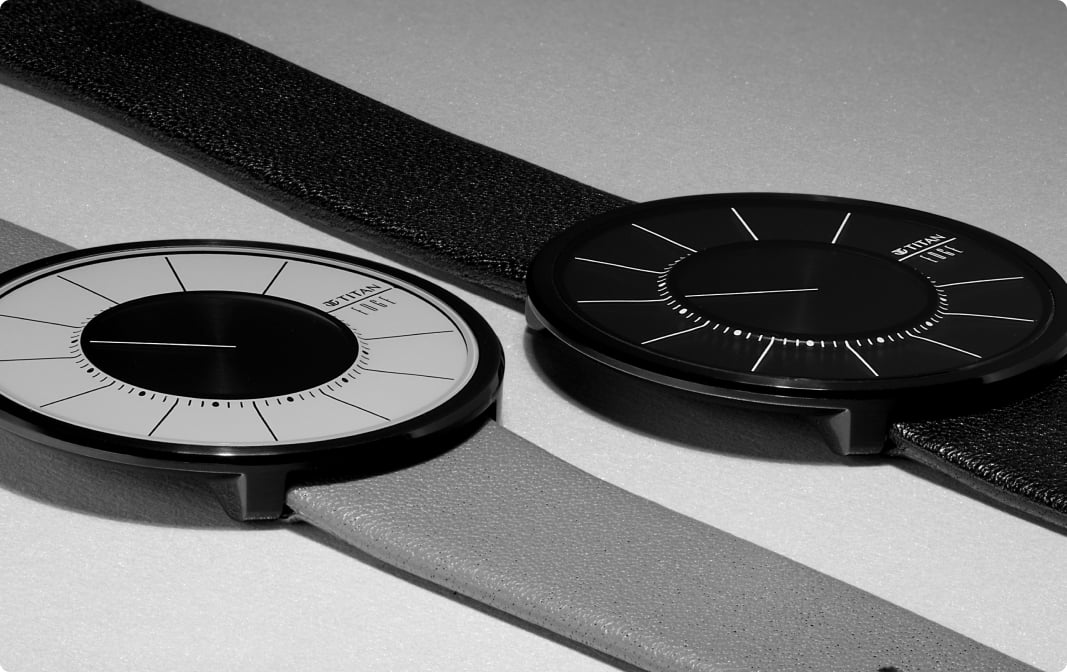
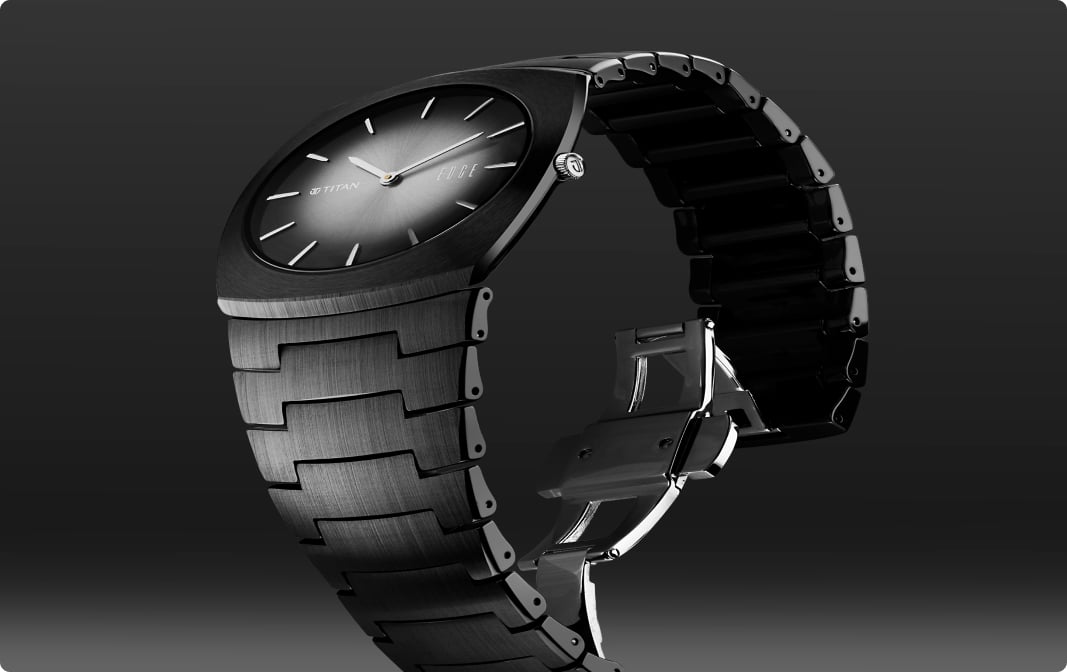
When Titan Edge was introduced in the early 2000s, it redefined what an Indian watch could look and feel like. At a time when thickness was often associated with durability, Edge challenged convention by proving that strength and slimness could coexist.
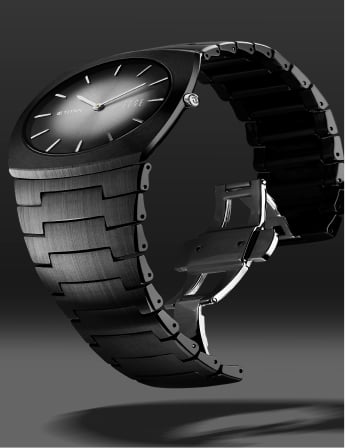
Edge became one of the world’s slimmest watches of its time, not as a technical showcase, but as a design statement. It prioritised profile, comfort, and restraint. Over the years, the collection has evolved, but its core philosophy remains unchanged. Thinness is not a trend. It is a discipline.
Mechanical watches rely on stored energy. The thinner the movement, the less room there is for the mainspring. This directly affects power reserve and long-term stability.
To solve this, watchmakers focus on efficiency. Friction is reduced. Gear trains are refined. Energy transmission is optimised.
Every improvement is incremental and invisible. But together, they determine whether a slim watch performs reliably or simply looks refined.
Thin watchmaking is not about adding complications. It is about perfecting fundamentals.
A slim watch wears differently. It sits closer to the skin. It moves naturally with the wrist. It slips easily under a cuff.
This lived experience explains why thin watches endure stylistically. They feel intentional rather than imposing. Refined rather than attention-seeking.
Edge watches reflect this understanding of wearability. Their slim profiles are not just a visual choice, but a functional one. Designed to disappear on the wrist while remaining present in purpose.
In an era of visual excess, thin watchmaking represents a quieter approach. It values control over scale, balance over bravado, and refinement over display.
Making a watch thinner is not about doing less.
It is about doing everything better, with less room to hide.
That is the discipline of thin.
Removed from the wishlist
Product moved to cart
Add minimum 2 products to compare
You may compare up to 4 items at a time
Added to wishlist