14 August, 2025
.
Swati Sharma

How India Tells Time: From Independence to Innovation

From 1947 to today, see India’s story told through the watch on our wrist.

How India Tells Time: From Independence to Innovation

Seventy years ago, at the stroke of midnight, India awoke to freedom. The timing cemented India’s tryst with destiny and its status as an independent nation. Having secured its independence, India then began laying the foundations for its growth from a fledgling nation into eventually becoming the world’s largest democracy and one of the world’s largest economies. As we celebrate India’s 79th year of Independence, let us trace India’s story of evolution captured in the face of changing aspirations through a unique lens: the watch on our wrist.

The Early Days: The HMT ERA

In the first few decades after 1947, owning a watch was not a casual affair; it was a significant milestone. For a generation building a new India, a timepiece was a prized possession. The choice was often between a prohibitively expensive imported model or a sturdy, Indian-made mechanical watch.

This domestic timepiece became a powerful symbol. It wasn't just for telling time; it was a rite of passage. Often gifted to mark a graduation, a first job, or a retirement, it represented the values of a young, industrializing nation: punctuality, discipline, and progress. Owning one meant you were part of India's march forward. The focus was entirely on durability and function, a reliable tool for a diligent citizen.

The Titan Revolution

The landscape of Indian timekeeping changed forever in 1984 with the launch of Titan Watches. A joint venture between the Tata Group and the Tamil Nadu Industrial Development Corporation (TIDCO), Titan didn't just sell watches, it reshaped the entire industry.

Titan revolutionized the Indian market in two fundamental ways: 

Technology: It brought the sleek, accurate, and modern quartz movement to the masses, moving away from the more traditional mechanicals. 

Perception: In a stroke of marketing genius, Titan repositioned the watch from a utilitarian device to a fashion accessory. Suddenly, a watch was an expression of your personality, style, and aspirations. It was no longer just about knowing the time; it was about what your time said about you.

A Legacy of Innovation

Titan's journey has been marked by constant innovation, reflecting a modern, confident India. Some of the most significant collections include: 

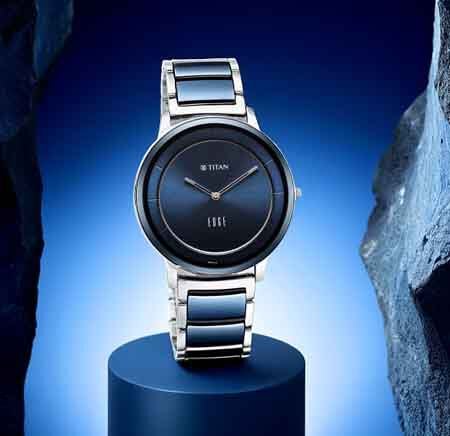
  • Titan Edge: A true feat of engineering, the Edge collection was launched in 2002. It featured the world's slimmest commercially available watch, at a mere 3.5 mm thick. This demonstrated that Indian design and manufacturing could compete with the best in the world.
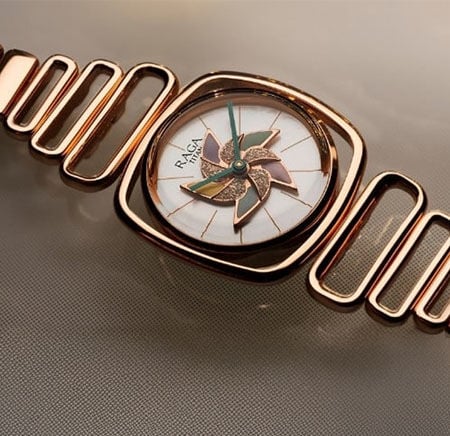
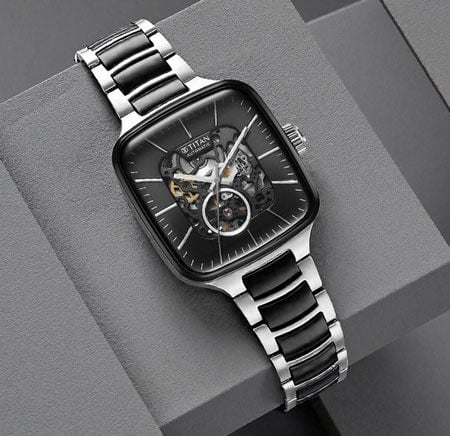
  • Heritage & Automatics: Catering to watch connoisseurs and tapping into national pride, a number of collections have been launched to celebrate Indian heritage. The Raga collection for women, for example, embodies elegance with intricate designs inspired by Indian aesthetics. Titan has also invested in creating its own in-house automatic movements, aimed at horology enthusiasts. 
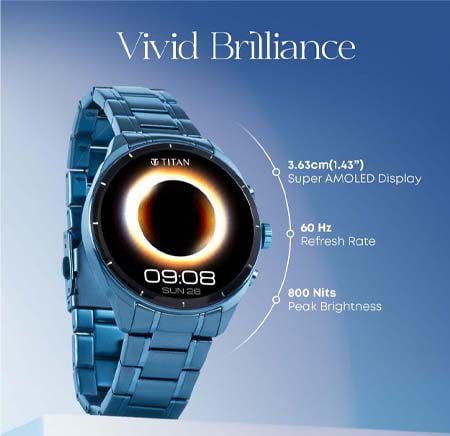
  • Smart Technology: With the rise of wearables, Titan has also launched smartwatches and connected devices under brands like Fastrack and its core Titan brand, blending traditional watch aesthetics with modern tech.

The evolution of the watch in India since independence mirrors the nation's own journey. Initially, a sturdy mechanical timepiece was a rare symbol of discipline and a milestone in a young, industrializing nation where function was paramount. This changed dramatically in the mid-1980s when the quartz revolution, spearheaded from Bengaluru, recast the watch as a vibrant fashion accessory for an aspirational middle class. As globalization introduced a world of choice in the 2000s, the watch became a statement of status, spurring local innovation like the record-breaking slim Titan Edge. Today, the Indian wrist reflects a dual identity: it either hosts a high-tech smartwatch for connectivity or a finely crafted automatic for enthusiasts of heritage and engineering. From a single tool of utility, it has evolved into a deeply personal symbol of a diverse, modern India.