The Chronograph
Why it still matters
Editor’s Pick
In a world of smartphones and smartwatches, few complications in watchmaking remain as culturally powerful as the chronograph. More than just a stopwatch, it marks the moment watches stopped being passive timekeepers and became active instruments — designed to measure, compare, and master time.
From racetracks to cockpits, from space missions to sporting arenas, the chronograph has long been the choice of those drawn to precision, purpose, and adventure.
A chronograph is a watch that combines standard timekeeping with an independent stopwatch function. Using pushers on the case, the wearer can start, stop, and reset elapsed time without interrupting the regular display of hours and minutes.
Invented in 1816 by French watchmaker Louis Moinet to track astronomical movements, the chronograph quickly became indispensable wherever precise timing mattered.
Over the 20th century, it evolved into an essential instrument for:
Motorsport — timing laps and speeds
Aviation — calculating distance, fuel consumption, and navigation
Military operations — coordinating missions and maneuvers
Space exploration — accompanying astronauts on lunar missions
This legacy transformed the chronograph into a symbol of human ambition and technical mastery.
Different chronographs are engineered for different levels of precision and use.
1-Second Chronograph
Measures elapsed time in one-second increments. Ideal for everyday timing such as workouts, laps, or daily tasks.
(Titan’s Half-Cut Chrono uses this format.)
High-Frequency Chronographs (1/10, 1/20, 1/100 Second)
Capable of measuring fractions of a second, commonly used in professional sports and motorsport timing.
Flyback Chronograph
Allows instant reset and restart with a single press — invaluable for continuous timing in aviation and racing.
Split-Second (Rattrapante) Chronograph
Features two central seconds hands to time simultaneous events, such as multiple runners or overlapping laps.
Many chronographs include specialized scales that expand their practical use:
Tachymeter — calculates speed over a fixed distance
Telemeter — measures distance based on the speed of sound
Pulsometer — estimates heart rate, historically used by physicians
Monopusher — controls start, stop, and reset via a single button
Chronographs may be powered by mechanical or quartz movements. Quartz chronographs are particularly valued for their accuracy, stability, and low-maintenance reliability.
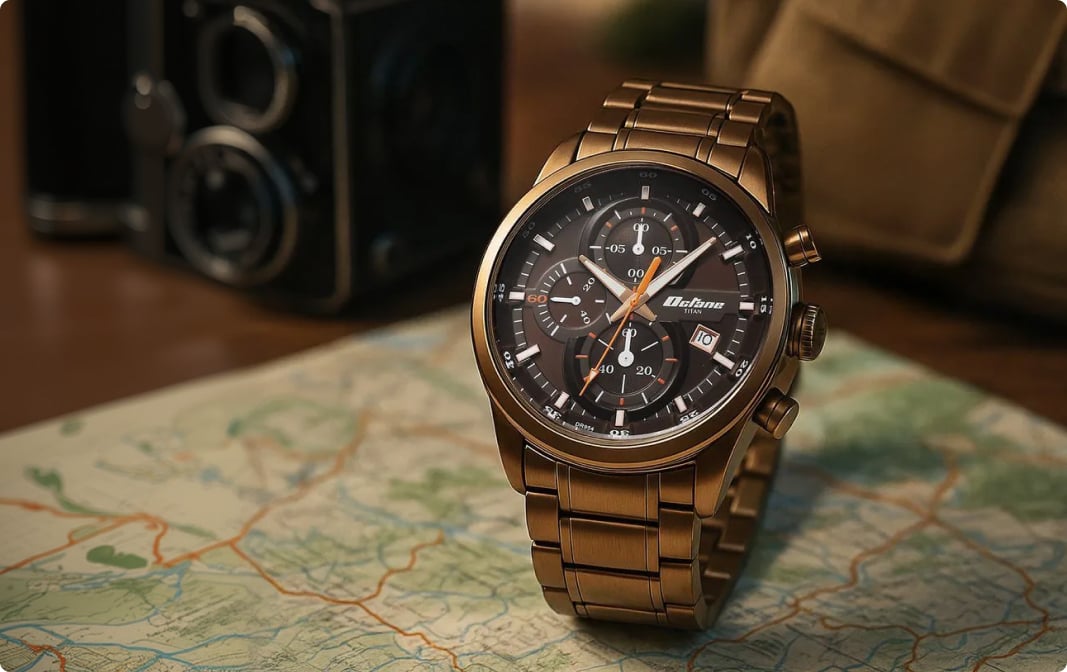
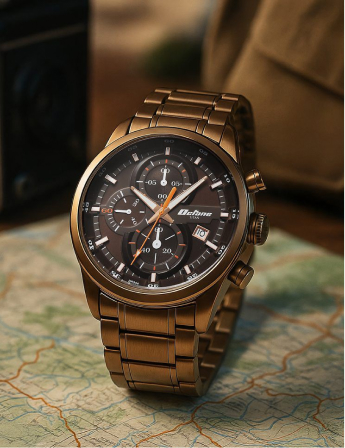
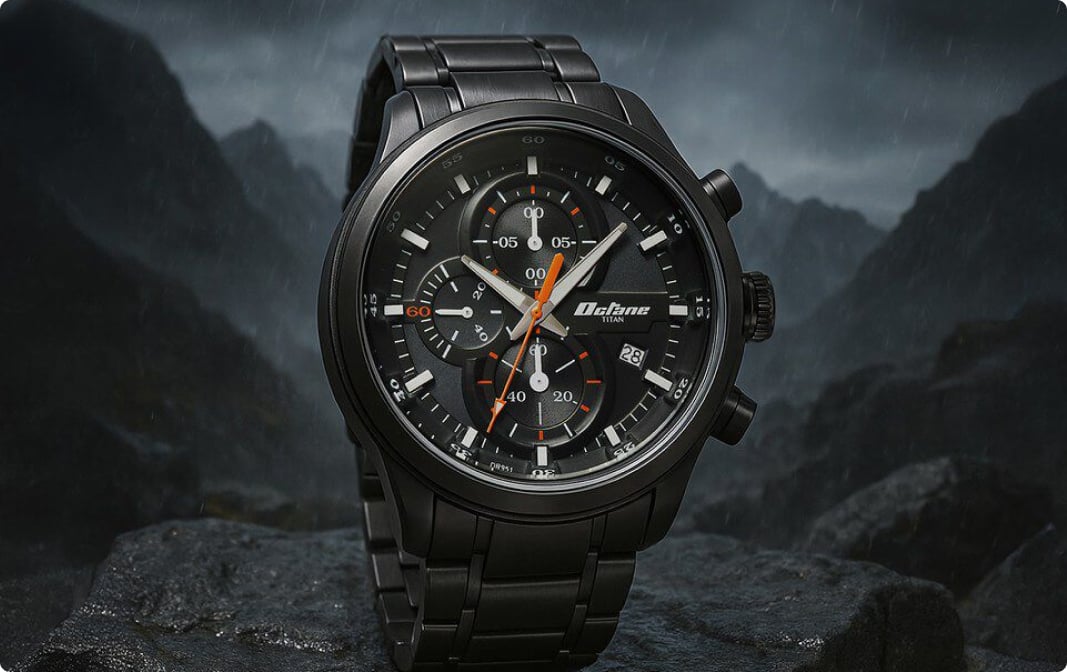
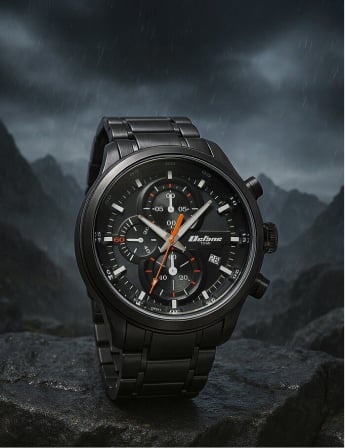
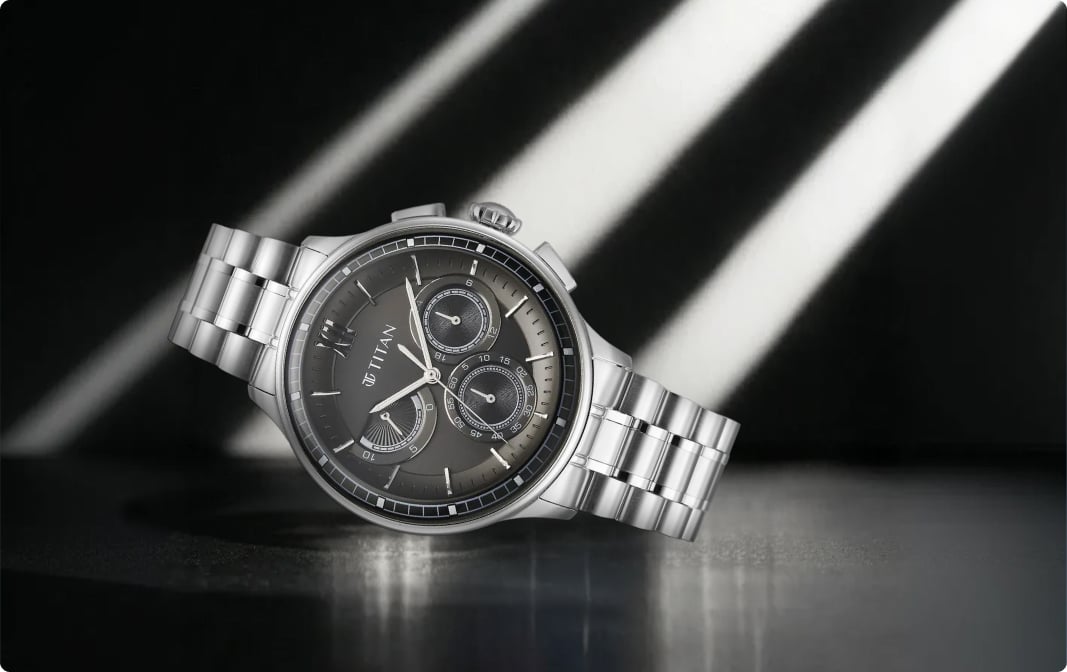
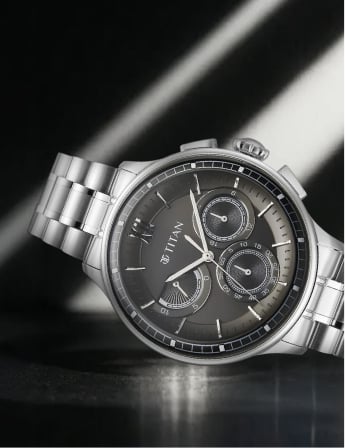
Titan’s Half-Cut Chronograph represents a contemporary interpretation of the complication combining bold design with precise, accessible timing.
At its core is the VR3G quartz chronograph movement, selected for its reliability, accuracy, and clean multi-function layout.
The dial architecture includes:
Hour, minute, and running seconds for everyday timekeeping
A 10-minute retrograde counter at 10 o’clock
A 24-hour indicator at 3 o’clock for AM/PM reference
A chronograph seconds display at 6 o’clock, measuring elapsed time in precise one-second steps
Pressing the top pusher starts the chronograph. The seconds display at 6 o’clock begins tracking elapsed time in one-second increments, while the retrograde minute hand at 10 o’clock moves across a 0–10 scale.
When it reaches 10 minutes, the hand snaps instantly back to zero and begins counting again — making short-duration timing quick and easy to read.
Pressing the top pusher again stops the timing. Pressing the bottom pusher resets all chronograph indicators to zero, while the main time display continues uninterrupted.
Removed from the wishlist
Product moved to cart
Add minimum 2 products to compare
You may compare up to 4 items at a time
Added to wishlist