13th Oct, 2026
.
Swati Sharma

Navratri to Diwali: Your Festive Style Guide

Explore festive styling ideas from Navratri to Diwali, with sarees, kurtas, colour combinations, jewellery tips and Titan watches to complement your festive looks.

Navratri to Diwali: Your Festive Style Guide

Explore festive styling ideas from Navratri to Diwali, with sarees, kurtas, colour combinations, jewellery tips and Titan watches to complement your festive looks.

The festive calendar has a way of making October and November feel like one long reason to get dressed. Navratri begins nine nights of colour and celebration, Dussehra brings traditional dressing into focus, Karwa Chauth has its own jewellery and occasion codes, and by Diwali, the wardrobe is ready for its most expressive moment.

In 2026, Navratri begins on 11 October, followed by Dussehra on 20 October, Karwa Chauth on 29 October and Diwali on 8 November. That is nearly a month of pujas, dinners, family gatherings and celebrations, often involving many of the same people. A completely new outfit for each one is expensive, unnecessary and, creatively speaking, a missed opportunity.

A better festive wardrobe begins with pieces you already enjoy wearing. Change the jacket, rethink the jewellery, alter the drape or introduce one accessory that shifts the mood of the entire look, like a watch embellishing your festival outfit ideas. The aim is not to match everything. It is to make everything feel intentional.

Navratri 2026 Style Guide


Navratri is celebrated over a period of nine nights, and the story behind it is a fight between Mahishasura and Goddess Durga. The buffalo demon had grown powerful enough to terrorise the heavens and the earth, where no god could stop him. The Goddess fought and ultimately defeated him, taking a different form each time.

Each night belongs to one of those forms, known as Navadurga, and is symbolised by a different colour. Following the colour scheme has become popular during the celebration, although the sequence can vary by year and regional customs.

Days 1 - 3 | Orange, White, and Red

Orange already has enough energy to carry an outfit. Saffron and marigold work particularly well for daytime kurtas, lehengas and sarees, while burnt orange and terracotta become richer in silk for the evening. Combine with cream layers and tan footwear. Warm metals are natural companions, but choose where they appear rather than repeating gold, rose gold and embroidery everywhere. Orange is associated with new beginnings, so you can wear it boldly.

White represents purity and peace, and leaves plenty of room to experiment with fabric. Ivory and cream chikankari and soft silks can be a good choice, where the embroidery or weave adds texture to the outfit. Crisp white, meanwhile, makes sense for cotton and linen kurtas. You can introduce colour with an embroidered jacket, a bright dupatta or statement earrings, but don't try to add all three to one look.

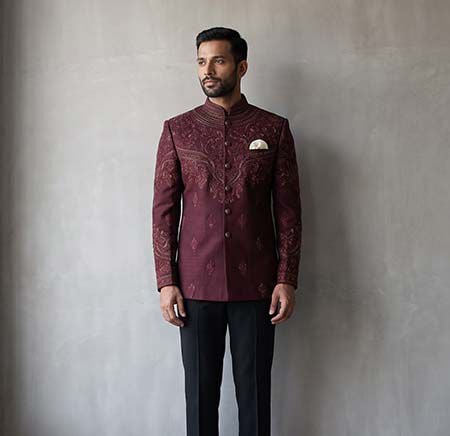
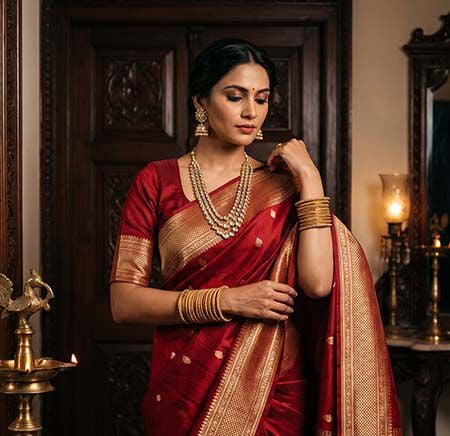
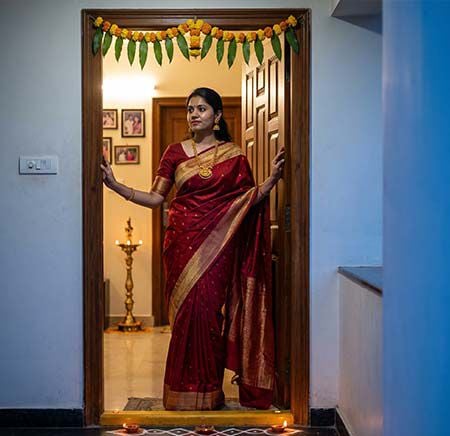
Red, on the other hand, rarely needs more competition. Maroon and oxblood pair well with velvet and brocade, especially when the fabric has a woven pattern or metallic embroidery. Vermilion and crimson are another option for silk. A heavily embroidered kurta or bandhgala can be worn with plain trousers and subtle accessories, such as the Titan Mechanical Slimline. It has a rose-gold mesh strap that picks up gold-toned buttons or embroidery, with a blue dial that contrasts against the red.

Days 4 - 6 | Royal Blue, Yellow and Green

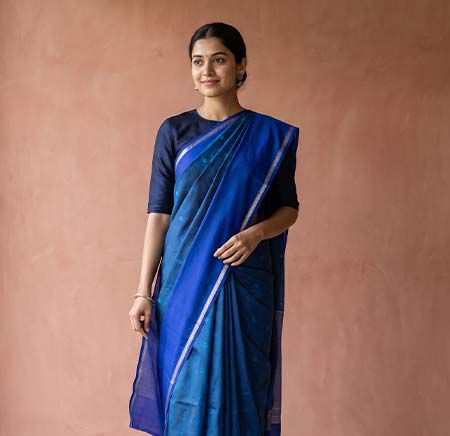
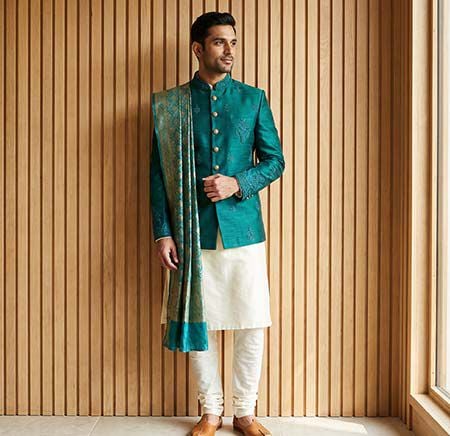
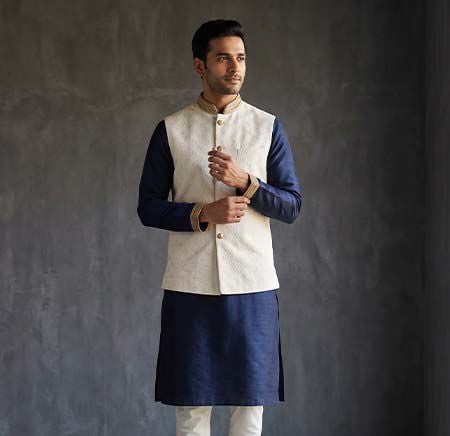
Royal blue has a depth that shows through silk, brocade and velvet. Sapphire, cobalt and ink-dark navy bring that richness to festive clothing like kurtas and sarees. Men can also bring out the bandhgalas for a more refined look. If the outfit has gold threadwork, repeat that finish through earrings or embroidered juttis instead of introducing another metallic tone.

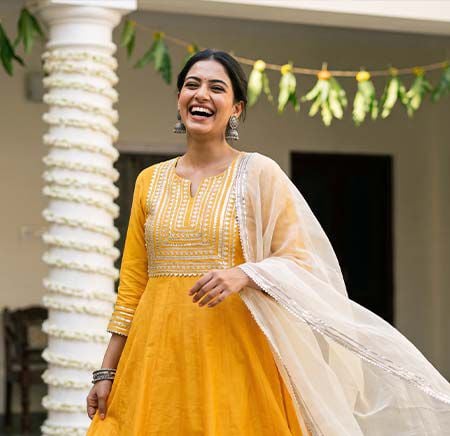
Yellow needs to be styled by shade. Mustard and ochre accompany cream, tan and antique gold. A bright lemon-yellow kurta or co-ord set, however, can benefit from a softer accessory or a little contrast. Try pearl earrings, ivory footwear or the Titan Raga Paris, With Love for women. Its heart-shaped, mirror-polished revolving red dial adds a nice little touch of colour, and the rose-gold stainless-steel bracelet brings warmth to the whole look.

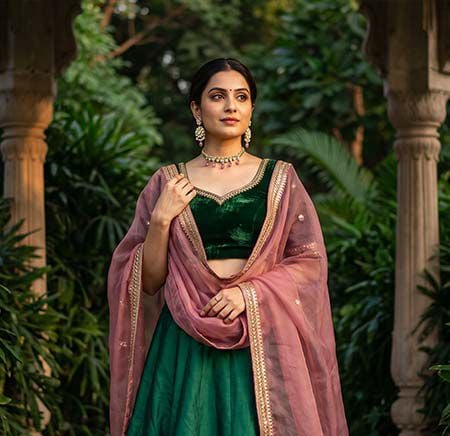
Green has perhaps the widest range of personalities. Emerald and bottle green can hold their own beside gold zari, bronze jewellery and heavier traditional fabrics, while sage and olive feel more natural in chanderi, cotton silk or linen blends with antique silver. If green dominates the outfit, avoid searching for an identical green accessory. Blue stones, dark brown leather or black can create a small break that makes the colour feel more considered.

Days 7 - 9 | Grey, Purple and Peacock Green

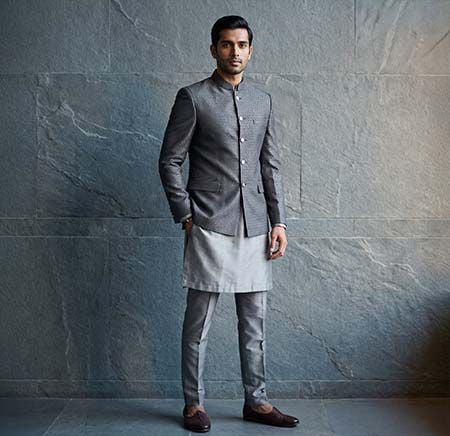
Grey is easy to underestimate because it relies less on colour and more on cut, textile and accessories. A silver-grey saree with an embroidered blouse can look just as festive as a charcoal kurta paired with a patterned jacket. Add a contrasting dupatta or one metallic accessory, and the outfit is ready. The Titan Regalia Dodecagon for men works well in this setting, with its grey dial, black stainless-steel bracelet and twelve-sided bezel on a slim 7.9 mm case.

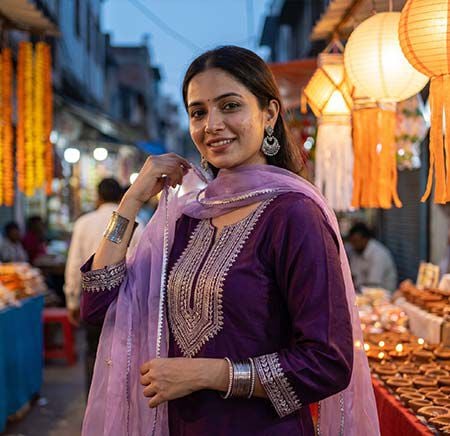
Purple changes considerably between plum, lavender, violet, and aubergine. Plum and aubergine take on different characters in silk, velvet and brocade. Pair cooler purples with silver-toned jewellery, and warmer plum shades with bronze or antique gold. If the outfit already has metallic embroidery, avoid mixing several jewellery finishes and consider black footwear to balance the shine.

Peacock green sits somewhere between teal and deep emerald, and its blue undertone comes through especially well in silk. Associated with compassion and fulfilment, the ninth night's colour can be worn as a silk saree with a gold border or an embroidered kurta. Keep the accessories limited to one piece of gold jewellery and gold or deep-brown footwear. By Day 9, that becomes a useful lesson for the rest of the festive season, where good styling is as much about knowing when to stop as knowing what to add.

Dussehra Style Guide

After nine nights of Navratri, the tenth day brings Dussehra, commemorating Lord Rama's victory over Ravana and Durga's triumph over Mahishasura. Saffron, red, yellow and white are preferred colours, appearing in everything from traditional sarees to embroidered kurtas. For the occasion, look towards regional weaves, classic Indian silhouettes and jewellery that draws from traditional designs.

Dussehra Looks for Men

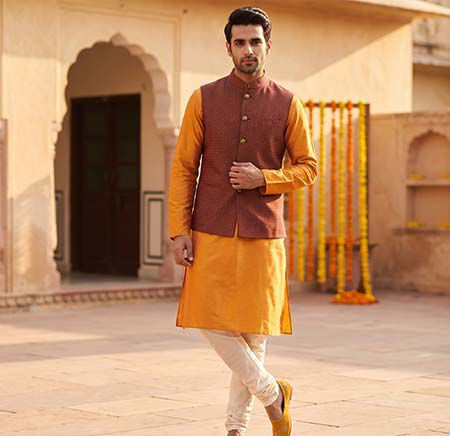
● Choose the right layer - Wear a Nehru jacket with a plain kurta, preferably in a contrasting colour or woven pattern. A bandhgala with embroidery along the collar or cuffs can be paired with straight trousers. A stole or pocket square is another option when the jacket has no embroidery.

● Balance the proportions - Pair a longer kurta with a shorter jacket that ends at the hip. A dhoti-kurta can be worn without a jacket, allowing the pleats and drape to remain part of the outfit.

● Style with footwear - Leather mojaris or embroidered juttis can be worn with maroon, mustard and saffron. Kolhapuri chappals are another choice for a cotton kurta or dhoti.


Dussehra Looks for Women

● Look at traditional silhouettes - A red Banarasi saree with gold zari, a mustard Kanjeevaram or a colourful Patola brings regional weaving traditions into the celebrations. For daytime pujas, look at handloom cotton sarees with a woven border, an organza saree or an embroidered anarkali. A sharara set is another option for those who prefer trousers.

● Drape the dupatta - A Gujarati Seedha Pallu drape brings the patterned pallu to the front, especially on a Patola saree. A traditional nine-yard Paithani can be worn in the Maharashtrian Nauvari style. For an anarkali or sharara, pin the dupatta at one shoulder, keeping the border in view. If you're heading outdoors for Ravan Dahan, secure loose fabric and avoid trailing hems.

● Style the jewellery - Gold jhumkas or a temple-style necklace can accompany a saree with a zari border. For a plain cotton saree, try kundan jewellery or an embroidered blouse. If the neckline already has mirrorwork or metallic embroidery, earrings and a bindi can complete the look.

An outfit worn during Navratri can be styled differently for Dussehra without much effort. A saffron kurta can be paired with a cream Nehru jacket and brown mojaris, while a red saree can be restyled with a contrasting gold blouse and smaller earrings. You may already have everything you need in your wardrobe.

Karwa Chauth Style Guide

Karwa Chauth is often celebrated as much through the shared ritual of getting ready as through the clothes themselves. Red remains closely linked to the occasion, but wine, blush and warm neutrals offer room to experiment beyond the traditional palette.

● Set the colour palette - Pair a red or wine saree with antique-gold jewellery and a matching blouse. For blush, ivory or beige outfits, bring in red through a contrasting dupatta, enamel bangles or a deeper lip shade.

● Plan the jewellery - An embroidered blouse or neckline needs little more than small earrings, especially if you're wearing an elaborate bangle stack. For a plain neckline, try statement jhumkas or a kundan necklace, keeping the remaining jewellery minimal.

● Build the wrist stack - Wear a watch beside one or two slim bangles in the same metal tone. If you're wearing traditional choodas or a larger bangle stack, keep them on the opposite wrist so the watch remains visible. The Titan Raga Paris, With Love can take the place of a bracelet, with its revolving red dial, rose-gold stainless-steel finish and zircon accents. The red dial picks up the colour of a traditional outfit, and the rose-gold bracelet can complement blush and ivory. Wear it alone or beside one slim bangle.


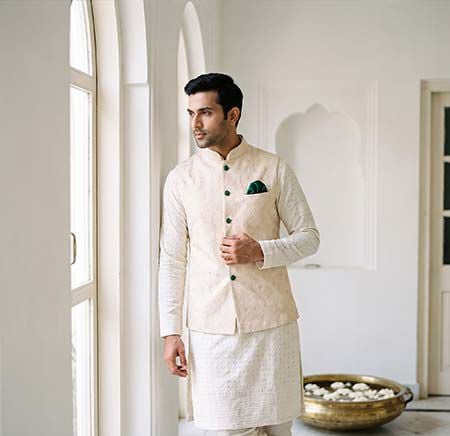
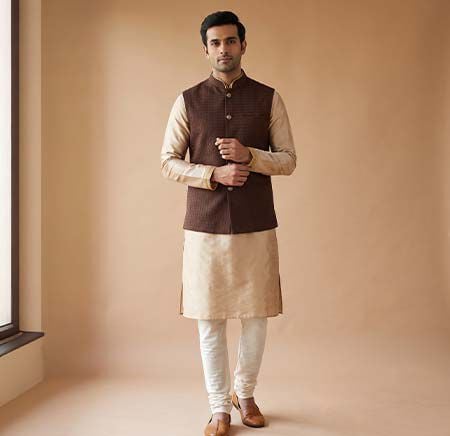
For men, an ivory kurta with a wine or maroon jacket is a good combination for this occassion. Beige, charcoal and deep brown are some other options you can look at, especially if your partner is wearing red or gold. Pick up one colour from their outfit through a jacket, pocket square or watch strap instead of matching the entire ensemble.

Diwali Style Guide

Diwali is the point in the festive calendar where a little more theatre feels earned. Jewel-toned silk, brocade, metallic threadwork, velvet and sculpted drapes all respond beautifully to evening light, but by this stage of the season the challenge is choosing which details should be included, not what would make the outfit festive enough.

Because Diwali 2026 falls on 8 November, it arrives after several weeks of dressing up, making wardrobe repetition more useful rather than less. A kurta worn for Dussehra can return under a richer jacket, a Navratri saree can be transformed with a different blouse, and a familiar silhouette can become evening-ready through one stronger accessory or change of texture.

This is where contrast, shine and scale can be pushed a little further than earlier in the season. The trick is still to establish a hierarchy. If the fabric is dramatic, let the accessories support it. If the clothing is controlled, the watch, jewellery or jacket can become the focal point.


Diwali Looks for Men

For men, Diwali allows more drama through texture. Deep black, midnight blue, oxblood and ivory create a confident base for silk, velvet and fine metallic embroidery. Choose one piece with presence, then build the rest of the outfit around it.

● Try a velvet bandhgala over an ivory kurta, or a silk kurta under a jacket with tonal embroidery. The shift in texture gives the outfit depth even when the colours stay close.

● Use metallic details where they will catch the light. A zari collar, engraved buttons or a narrow-embroidered cuff has more impact than decoration spread across the entire outfit. Watches like the Titan Yin Yang Skeletal Automatic can give black kurtas or cream bandhgalas a striking focal point. Its silver and rose-gold dial places a patterned surface beside a partially openworked view of the movement.

● For a contemporary look, pair a dark kurta with a draped stole or a sharply cut jacket. Deep brown or black loafers take the outfit from the puja into dinner without making it feel overly formal.


Diwali Looks for Women

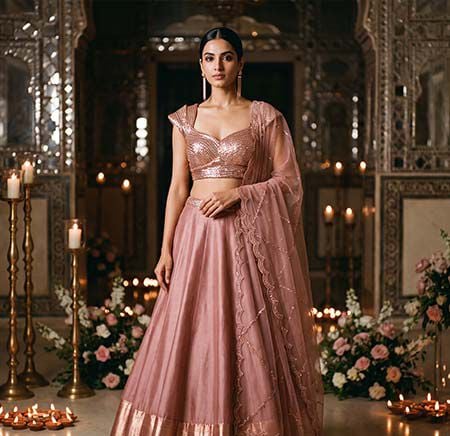
For women, Diwali is a chance to play with scale and light. A sweeping silk saree, full lehenga or sharply draped co-ord can carry jewel tones, broad borders and intricate surface work with ease. Choose fabrics and embellishment that reveal their detail as you move through the evening.

● Let a jewel-toned saree or lehenga meet the light through a metallic border, sequinned blouse or embroidered dupatta. Keep the colour story tight so the shine looks deliberate.

● With a dramatic blouse or sculpted neckline, pull the hair back and choose earrings that follow its shape. A softer neckline leaves room for a collar necklace or layered chains.

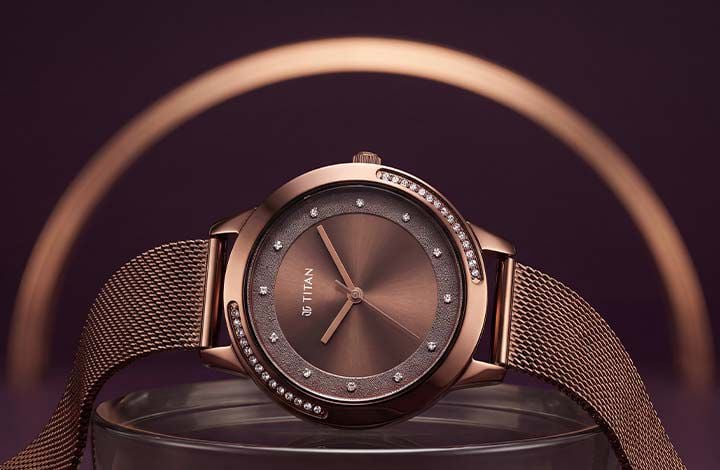
● For a contemporary co-ord, use contrast through texture rather than extra jewellery. Pair satin with brocade, or a plain drape with an embroidered jacket and a small evening bag. The Titan Purple Razzle Dazzle can add depth to bronze, mustard and deep-green outfits. Its brown dial and crystal-set bezel work particularly well with a bronze blouse or green silk saree with warm metallic thread. Wear the stainless-steel bracelet without an extra wrist stack.


Shop the Festive Edit

A good festive wardrobe is built as much through restraint as abundance. Sometimes the detail that changes an outfit is a contrasting dupatta already sitting in the wardrobe. Sometimes it is a different pair of earrings, a jacket layered over a familiar kurta or a watch that quietly picks up the metal in the embroidery.

Across Navratri, Dussehra, Karwa Chauth and Diwali, the useful question is not simply, “What should I buy for this festival?” It is, “What does this look still need?” That shift makes it easier to repeat clothes without repeating the same outfit.

Enjoy each invitation for what it brings, from the music and rituals to the people gathered around the table. You can also explore Titan’s festive edit and choose a watch that feels at home in your wardrobe, wears easily across the season and stays with you well beyond it.


FAQ'S

Start with the colour of the day, then choose one or two details to shape the look. A contrasting dupatta, embroidered jacket, earrings, footwear or a watch can change an outfit without adding too many competing elements.

Try warm-toned kurtas and sarees for orange, ivory outfits with a colourful dupatta for white, and embroidered traditional clothing for red. Royal blue works well in silk or brocade, and peacock green can carry gold details for an evening garba look.

Choose an outfit that carries colour, texture or light without relying on all three at once. Men can wear a silk kurta, velvet bandhgala or dark festive jacket. Women can choose a silk saree, lehenga or sharply draped co-ord with one clear focal detail.

Change one or two accessories to suit the occasion. An ivory kurta can be paired with a colourful Nehru jacket for Navratri and a more restrained jacket for Dussehra. A saree can feel different with a contrasting blouse, jewellery or dupatta.

Yes. Wear the watch beside one or two slim bangles, or keep a larger bangle stack on the opposite wrist. Coordinate the metal finish with the jewellery and leave enough space for the watch to remain visible.

Ivory, maroon, navy and charcoal are reliable choices for men, especially in silk, brocade or textured cotton. Women can choose red, jewel-toned or traditional silk sarees and embroidered kurta sets. The fabric, weave and border matter more than following one prescribed colour.