Learn how to style watches with sarees, bandhgalas, lehengas, anarkalis, kurtas and sherwanis. Explore pairings, colours, and styling ideas.
Festive dressing is usually built in layers. You start with the kurta or saree, add the jacket or blouse, decide on jewellery, think about footwear and then, almost as an afterthought, put on whichever watch happens to be closest.
That works until it doesn't. A casual leather strap can suddenly look out of place beside a heavily embroidered sherwani, a large sports watch can interrupt the line of a fitted sleeve, and a decorative bracelet watch can lose all of its impact when pushed into a stack of equally elaborate bangles.
A watch deserves the same consideration as every other detail because it occupies one of the most visible parts of the outfit. The right one can echo a zari border, introduce contrast against a plain kurta or replace jewellery entirely on one wrist. The trick is not to match everything. It is to decide what you want the wrist to contribute.
Log In To Unlock Up To 10% Off* On Your Purchase
The watch that works with a white office shirt does not automatically work with an embroidered sherwani, just as the bracelet watch worn with a chiffon saree may feel too delicate beside a heavily embellished lehenga. Festive clothes change the amount of colour, texture and shine around the wrist, so the watch needs to respond to that.
The simplest way to choose is through visual weight. A plain cotton kurta leaves room for a stronger dial or metal bracelet. A silk sherwani with zari, decorative buttons and a brooch may need something quieter. The same applies to women's dressing, where a minimally accessorised saree can take a sculptural watch, while a lehenga already carrying embroidery, earrings and bangles may benefit from a slimmer, more restrained piece.
Then there is proportion. Case diameter matters, but thickness, bracelet construction and sleeve shape often matter more with ethnic wear. A watch should appear naturally when the wrist moves rather than fighting its way out from underneath the cuff. With bangles, the question becomes different again - should the watch join the stack, balance it from the opposite wrist or replace it altogether?
Men's ethnic wear can move from an almost unadorned linen kurta to a heavily embroidered sherwani without changing the basic idea of traditional dressing. That range is why there is no single “ethnic wear watch”.
Instead, look at the fabric, the amount of detail, and what is happening at the cuff. From there, the choice between leather and metal, a clean dial and a more expressive one, becomes much more intuitive.
A kurta gives you the most freedom because the fabric can completely change the level of formality. Cotton, linen and lightly embroidered styles have a softer, more relaxed surface, while silk, jacquard and brocade naturally feel richer.
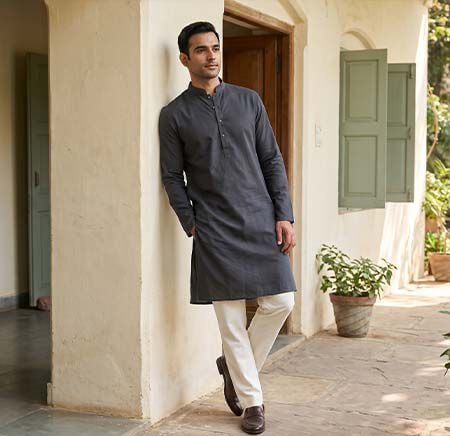
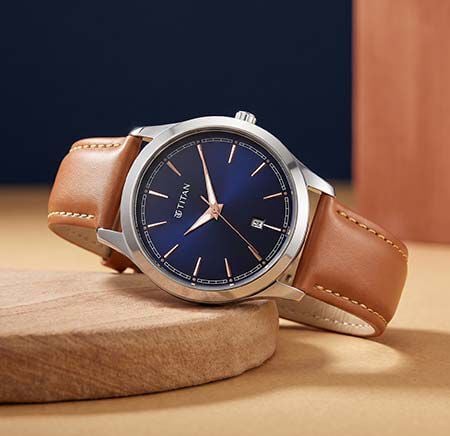
For a simple cotton or linen kurta, leather is an easy starting point. Tan and brown straps pick up the warmth of traditional footwear, while a blue or green dial can introduce colour without competing with the fabric. The Titan Urban Blue Dial Leather Strap Watch works well in that role, with its blue dial gives ivory, beige and olive kurtas a point of contrast, while the tan leather strap connects naturally with brown mojaris or sandals.
Its proportions also suit this kind of dressing. The case measures 40mm wide and 8.2mm thick, so it has enough presence to register without sitting particularly high underneath a sleeve. The watch uses a quartz analogue movement, mineral glass and a traditional buckle strap. You can find it in the Utsav Sale at ₹2,340*.
With a silk or jacquard kurta, metal can work just as well because the bracelet responds to the sheen of the fabric. The dial, however, may need to become quieter. If the kurta already has gold threadwork and decorative buttons, there is little reason for the watch to introduce another highly detailed surface.
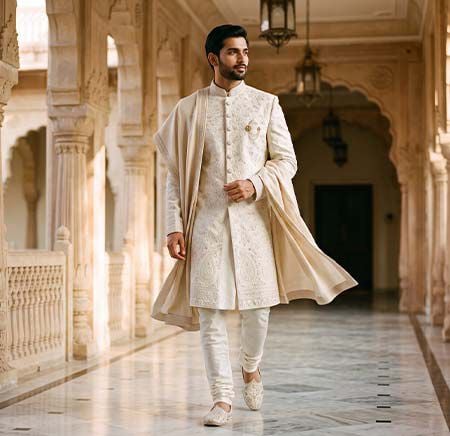
A sherwani often has much more happening near the wrist, with brocade, embroidery, covered buttons, piping, perhaps a stole and sometimes a brooch. That makes restraint useful, but it does not mean the watch always has to disappear.
A highly ornate sherwani usually looks better with a cleaner dial and controlled metal bracelet. A more minimal sherwani, however, creates room for the watch itself to become the detail. That is where a skeleton or mechanically expressive piece can work particularly well.
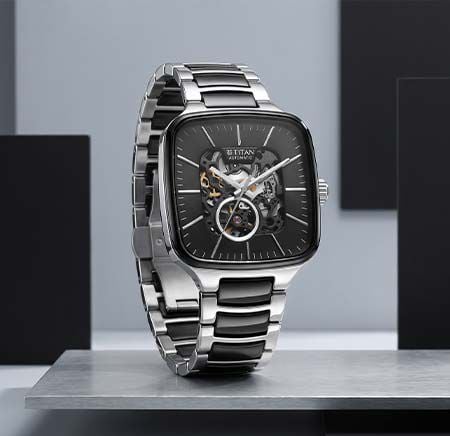
The Titan Automatics Ceramic Fusion Skeleton makes that distinction clear. Its black skeleton dial reveals Titan's in-house 7A20-S automatic movement, using 22 jewels, offering a 36-hour power reserve and rated to -10/+30 seconds per day. The movement is intended to become a part of the visual experience at the wrist.
Around it, the construction continues the black-and-silver story through a two-toned stainless-steel strap with ceramic links and a butterfly clasp. The case measures approximately 39mm wide, 49mm long and 12.9mm thick, giving the watch more depth than a slim dress piece at a festive sale price of ₹23,995*. That makes cuff space important. Rather than forcing it beneath a tightly fitted sleeve, let it appear naturally beside a simpler sherwani where the openworked dial has room to be noticed.
Keep the other accessories in mind. If the sherwani has decorative buttons, a brooch or several rings, there may be little reason to add a kada or another bracelet beside the watch. Let the wrist carry one clear detail.
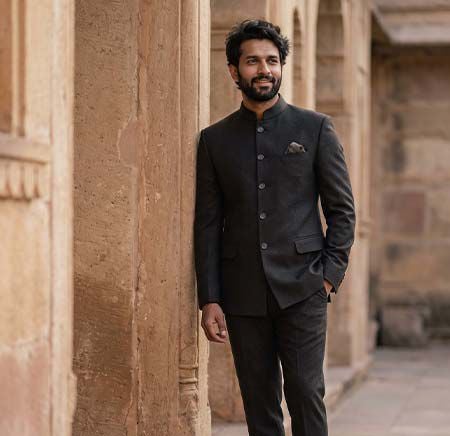
A bandhgala already has a strong sense of order with a high collar, clean front, defined shoulders and a neat line of buttons. That makes the wrist one of the few places where you can introduce personality without disturbing the tailoring. The choice really comes down to whether you want the watch to warm up the look or become a more architectural focal point.
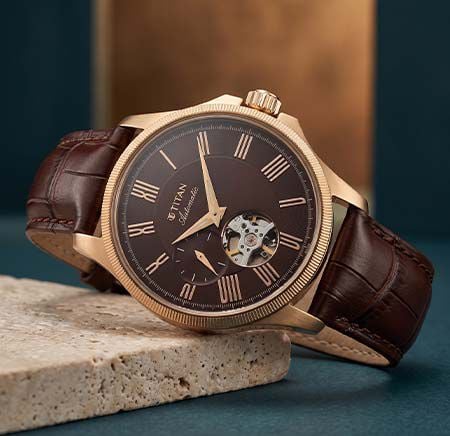
For a bandhgala in navy, bottle green, cream or deeper earthy tones, the Titan Automatic Atrium Offset Seconds is the more understated choice. Its maroon sandblasted dial, classical Roman numerals and offset-seconds display at 9 o'clock bring character without making the face visually busy, while the brown leather strap connects naturally with tan or dark-brown footwear. Inside is Titan's in-house Vetra Calibre 7A200-C automatic movement with a 40-hour power reserve, housed in a 42mm stainless-steel case beneath a domed sapphire crystal with triple-layer anti-reflective coating. At 11.76mm thick, it has presence but can still sit comfortably with a bandhgala that is cut with a little room at the cuff.
If the bandhgala itself is cleaner, perhaps charcoal, black, ivory or midnight blue with minimal embroidery, the Titan Stellar Cupola Automatic can take on a much more expressive role. Inspired by cupola domes and medieval astronomical instruments, its grey skeletal dial layers a CNC guilloché centre with a translucent Sun-Moon disc that allows glimpses of the movement beneath. The IP bronze stainless-steel bracelet and fluted bezel bring warmth to the otherwise cool dial, making it especially effective with antique-gold buttons, a muted brooch or warmer metallic detailing. Inside is Titan's in-house 7A-27 automatic calibre, with 22 jewels and a 40-hour power reserve.
Overall, a bandhgala is easiest to style when you treat the watch as part of the tailoring rather than as a separate accessory. Let the colour of the dial or strap pick up one element already present in the look, whether that is the buttons, footwear, pocket square or embroidery, and keep the proportions in check around the cuff. Cleaner bandhgalas can take a more expressive watch, while textured or heavily detailed versions usually benefit from something more restrained. The goal is not to match every element, but to make the watch feel like it belongs in the same visual language as the outfit.
With women's ethnic wear, the watch enters a space already occupied by jewellery. Bangles, cuffs, rings and embroidered sleeves all compete for the same few centimetres of wrist, which is why choosing the watch separately from the jewellery rarely works.
There are three useful approaches. The watch can replace the bracelets, bangles, jewellery on one wrist, sit beside one or two slim pieces, or balance a heavier stack worn on the opposite arm. Which one works depends less on rules and more on how elaborate the watch already is.
A sculptural Raga may need no company at all. A simple watch, on the other hand, can sit comfortably beside a small bangle stack without getting lost.
A saree gives the wrist plenty of visibility, particularly with sleeveless or short-sleeved blouses. That makes it one of the easiest outfits for treating the watch as jewellery rather than simply a functional accessory.
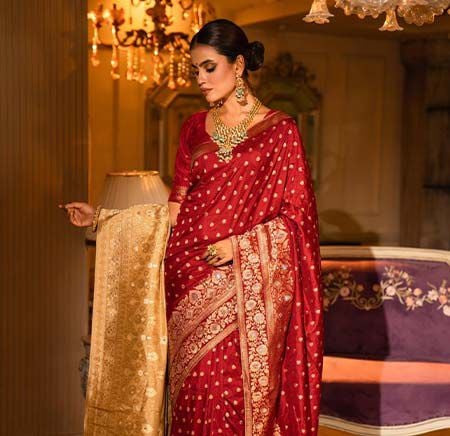
With Banarasi, Kanjeevaram or another saree carrying a strong zari border, avoid automatically recreating that same level of detail at the wrist. A decorative bracelet watch can replace the bangles entirely on one arm, allowing earrings, a necklace or the saree border to carry the rest of the shine.
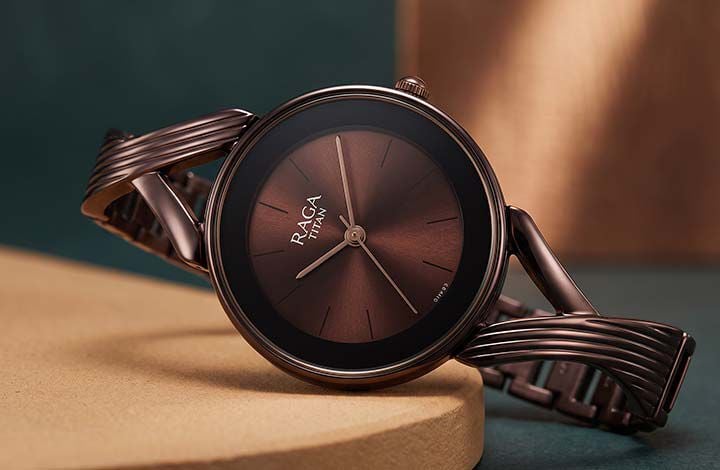
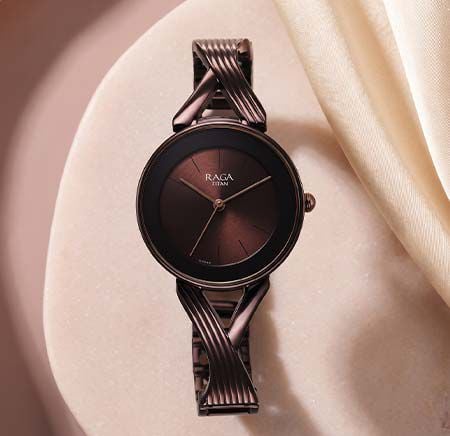
The Titan Raga Chic Brown Dial works particularly well in that role. Its brown dial sits within a compact 32mm-wide brass case, while the metal bracelet and jewellery clasp make the watch feel closer to a sculptural accessory than a conventional everyday watch. At 8.2mm thick, it has enough substance to hold its own beside silk without becoming overly bulky.
Its brown tone also works surprisingly well across festive palettes, including rust, olive, copper, cream and antique gold. Instead of stacking several bangles beside it, let the watch take one wrist and allow the jewellery to appear elsewhere.
With lighter sarees in chiffon, organza or georgette, there is more room to experiment. One or two slim bangles in a related metal tone can sit beside the watch, provided they do not overwhelm it or repeatedly strike the case.
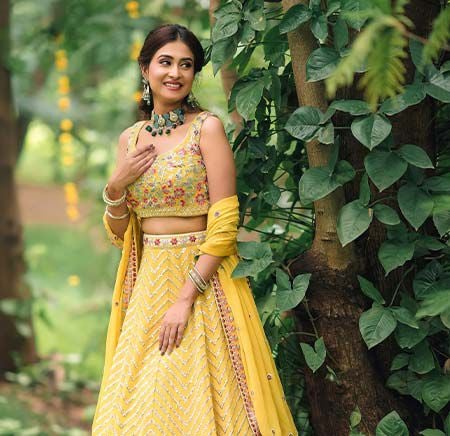
A lehenga already creates several zones of interest, be it that blouse, skirt, dupatta, earrings and often bangles. The wrist therefore needs a hierarchy rather than another layer of decoration.
If the outfit is heavily embroidered, the watch can replace part of the jewellery. If the blouse and skirt are cleaner, the watch can become part of a deliberate stack.
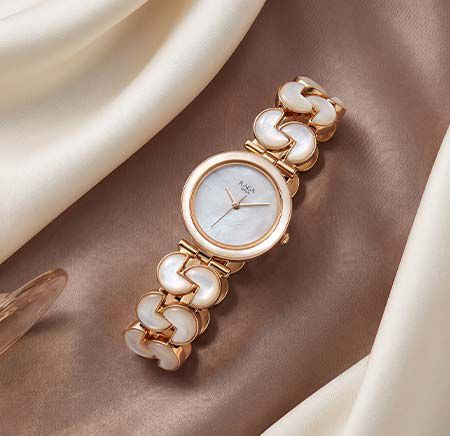
The Titan Raga Power Pearls is particularly suited to this because it already sits halfway between watch and jewellery. Its mother-of-pearl dial, shaped rose-gold links and domed glass draw on vintage pearl jewellery, while the watch also comes with a matching mother-of-pearl mosaic bracelet for a coordinated stacked look.
The proportions remain delicate despite the decorative treatment as the case measures 32.5mm long, 28mm wide and 6.55mm thick. It uses a quartz movement, mineral glass and jewellery clasp, with a 24-month movement warranty and 12 months on the battery at a festive price of ₹23,965*.
The styling decision comes down to the rest of the outfit. With a heavily embellished lehenga, wear the watch alone and move the matching bracelet to the opposite wrist if you want it at all. With cleaner silk or brocade, the two can be worn together as a controlled jewellery story.
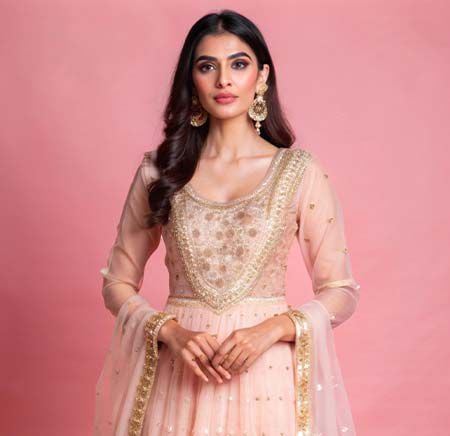
Anarkalis create drama through length and movement rather than simply surface detail. The flare, bodice, dupatta and sleeves all contribute, which means the wrist can become a useful place to introduce contrast.
The sleeve is the first thing to check. A sleeveless or short-sleeved anarkali gives a larger decorative watch space to breathe. An elbow-length or heavily embroidered sleeve usually works better with something slimmer that sits closer to the wrist.
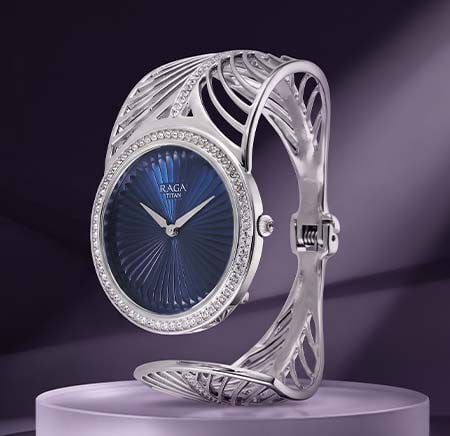
The Titan Raga Silver Blue Dial offers an interesting option as it has the shape of a delicate kada rather than an ordinary watch strap. Its sculpted sterling-silver band opens wide for wearing and closes around the wrist without a separate clasp, making it an alternative to a bangle with an anarkali. The midnight-blue dial brings contrast to ivory or silver-toned embroidery, while crystal accents around the case add a little sparkle for an evening celebration.
That blue-and-silver combination creates especially good contrast with ivory, navy, cool grey and embroidery using white stones or silver thread.
Metal finishes can pick up details already present in a festive outfit, from zari borders to buttons and jewellery. Exact matching is optional, but the finishes should have a clear relationship.
Mixing Metals is not a problem either. A two-tone ring or embroidery containing both gold and silver can provide a connection between a silver watch and warm-toned bangles. Keep one finish prominent and let the others appear in smaller details. If the outfit already has extensive metallic embroidery, adding three competing bracelet finishes can make the wrist feel crowded.
Keep these final checks in mind when trying the watch with the complete outfit.
Dos
Don'ts
A festive watch need not be reserved for one celebration. The same leather strap worn with a kurta can return to everyday use, while a decorative bracelet watch can be worn with a simpler outfit long after the festivities.
Choosing one that feels comfortable with the finished outfit matters as much as choosing its colour or finish. Pay attention to the way the watch sits on the wrist, especially when worn beside jewellery.
Explore Titan's collections to find a watch worth wearing for the occasion and beyond.
Log In To Unlock Up To 10% Off* On Your Purchase
Removed from the wishlist
Product moved to cart
Add minimum 2 products to compare
You may compare up to 4 items at a time
Added to wishlist